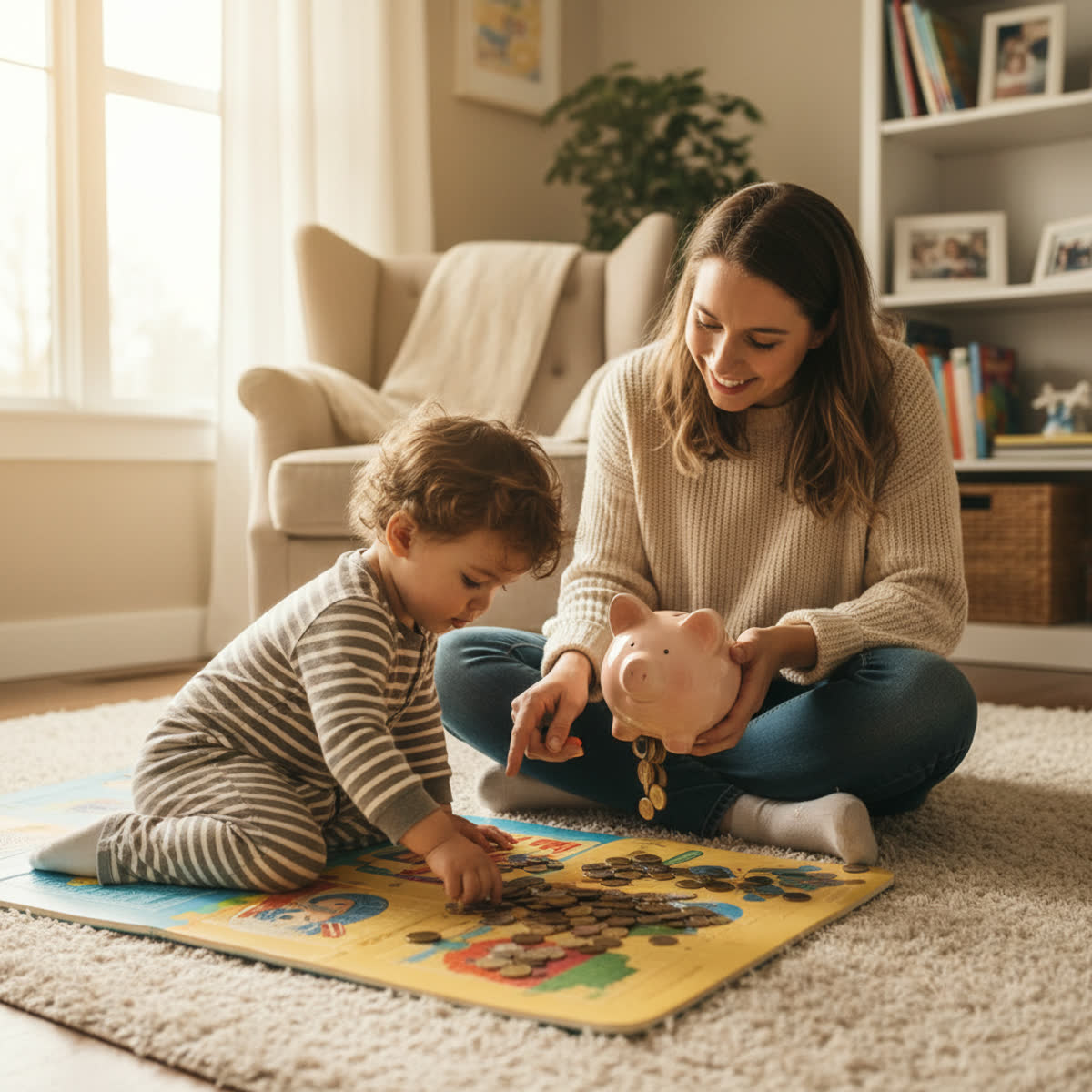
Why Wait Until 18? Starting Early With Money Lessons
Every time a news story drops about another state requiring personal finance classes in high school, we cheer. But as parents chasing Financial Independence on one income, we can’t help thinking: why wait until a kid’s old enough to borrow the car keys before they learn about money?
Our kids, Lil Spark and Baby Spark, are both under three. They’re not asking how a mortgage works. But if there’s one thing the FIRE mindset has taught us, it’s that habits beat hacks. The quieter, everyday stuff matters more than any worksheet or dramatic sit-down money talk.
Everyday Money Language: Narrate Your Moves
Kids are constantly watching, copying, and absorbing. We make it a habit to narrate small financial choices out loud:
“We’re putting the groceries away because we found some deals.” “Let’s wait and buy that toy next week.” “Look, our neighbor’s garage sale sign. That’s one way families earn money.”
It’s less about spelling out every detail, more about normalizing that money is a part of how the world works.
Modeling Choices: Scarcity and Enough
Toddlers are natural minimalists. But store aisles can be overwhelming. So we talk about tradeoffs: “We’re getting oranges instead of cookies today.” “We saved our treat day for this ice cream.” “Let’s pick one toy, not three.”
We also name our own tradeoffs out loud as grownups: “We’re skipping takeout tonight so we can go to the zoo this weekend.” It helps us too, remembering our whys even when we’re exhausted.
Play Is the Best Money Teacher
We’re not prepping our toddlers for Shark Tank. But play is where so many money concepts get their first roots. Setting up pretend stores with random pantry items, pointing out cash registers and price tags on real-life outings, using oversized play coins (we 3D printed ours, but there are great sets on Amazon) instead of real ones – no choking hazard, same learning moment, and swapping toys with neighbors during playdates instead of always buying new ones.
Let Them See the Behind the Scenes
Kids soak up rhythms and patterns. We bring ours into those patterns at their level: involving them in setting up the grocery list, letting them poke the screen at the self-checkout, encouraging them to help sort mail. Whenever we move money between accounts or talk about a big family expense, we narrate it: “We’re moving this so it’s ready for next month.”
Practical Tips for Exhausted Parents
Use the words “save,” “spend,” and “share” regularly, even if it’s just about snacks. Narrate your choices but skip the lectures. Let kids participate in real transactions, even just pressing buttons. Embrace mess: some weeks it’ll go great, some weeks you’re in survival mode. They learn from what you do, not just what you say.
What Money Habits Are You Modeling?
If you’re reading this, you’re probably doing more than you think. What money habits or lessons are you modeling for your kids, even, maybe especially, when you’re just trying to get through the day? Drop your thoughts in the comments. Let’s help each other raise money-smart kids, one snack negotiation at a time.
We wrote a children’s book about exactly this.
Otter and Badger: Two Friends, Two Paths teaches kids about saving and spending through a rhyming story. No lectures. Just two friends making different choices.
We wrote a rhyming picture book about this — Otter and Badger.Get the Book – $6.99
Find more family money tools on our Resources page.
Keep reading: Ollie and Brock: A Children’s Book About Saving and Spending | Our Family’s FIRE Journey
Get the Family FIRE Calculator
A free spreadsheet showing your real timeline to financial independence based on your actual savings rate. No fluff.
No spam. Just honest updates from a real family figuring this out.
Related reading
If you are already living paycheck to paycheck, breaking the cycle is the first move. We did it with a simple one-week reset plan that changed how we saw money. The paycheck-to-paycheck reset we used.