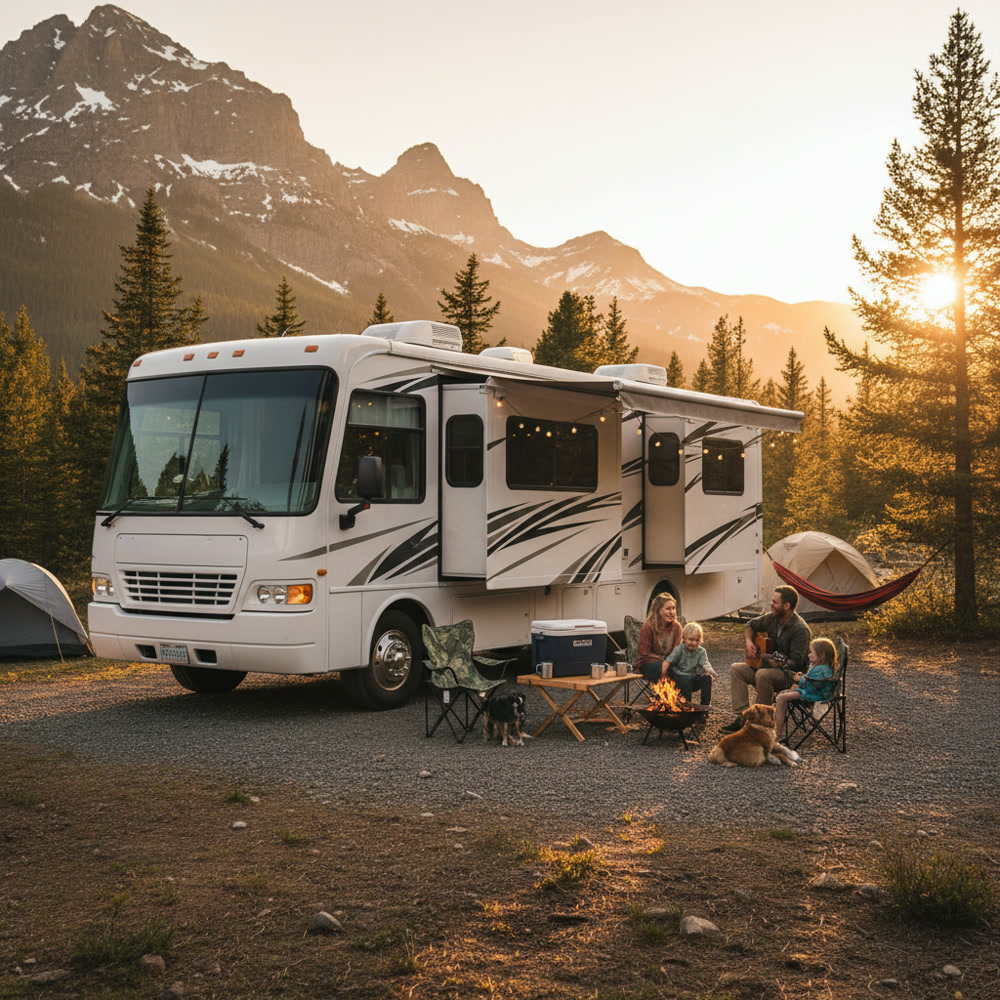
We’re the Rolling With Fire crew: two parents, two little sparks, one big dream of full-time Class A RV life. But before we sell the house and move into a rig, we want to talk straight about what it actually takes. Those glossy Instagram reels? They leave out a lot. Here’s what we’re finding as we plan.
Why Full-Time RV? And Why Now?
Housing is a pressure cooker. We break down the housing math in detail in our RV housing hack post. Rents are up, houses are out of reach in cities we like, and we keep seeing families who seem to have found an escape hatch: sell almost everything, live smaller, travel bigger. But the financial independence crowd sometimes glosses over the not-so-picture-perfect parts. We want the honest version.
What a Class A RV Actually Costs
A decent, roadworthy Class A runs anywhere from $50,000 (used, older, probably needs work) to $250,000+ (new, all the bells and whistles). We’re aiming for the $75,000-$110,000 range, third owner or so. If you’re financing, plan on at least 10-20% down, which means $8,000-$22,000 in cash just to buy the RV.
Then there’s registration and taxes (a few hundred to a couple thousand), RV insurance ($1,200-$2,400 per year for full-timer’s coverage), and upgrades like solar, internet, tow gear, and safety fixes, easily another $2,000-$6,000 before you’re truly road-ready.
Monthly Living Expenses: Not Always Cheaper Than a House
Our research puts the monthly total somewhere between $2,500 and $4,500 depending on your style and location:
Campground fees: $900-$1,800 per month. State parks might run $500-$1,200 if you can snag long-term spots, but private parks in popular areas spike higher.
Fuel: If you’re moving regularly, $200-$600 per month for a Class A.
Maintenance and repairs: Budget at least $200-$400 per month. A real repair (slideout motor, AC) can be a $1,000-$5,000 surprise. Most people under-budget here.
Internet and connectivity: $100-$200 per month for solid work-from-the-road connections.
Health insurance: A wild card. If you’re not covered through work, be ready for sticker shock.
Schooling, Childcare, and Family Logistics
The Instagram version shows smiling kids with the Grand Teton Mountains out the window. But for most families, school and childcare are legitimate puzzles. Homeschooling is common among RV families but it’s serious work for the parent in charge. Public school isn’t an option if you’re moving all the time. For us, we’re planning a homeschool hybrid, but we haven’t cracked the code yet.
The Secret Expenses Nobody Brags About
Your RV is not an investment. Values drop fast. You still need storage for sentimental things, bikes, and tools ($50-$150 per month for a storage unit). Healthcare on the road means not all clinics take your insurance. Mail forwarding services run $10-$30 per month. Breakdowns are not a matter of “if” but “when.”
What We’re Preparing For
We’re still in the planning phase. We’re building a cash cushion beyond what the online budgets say, mapping out travel by season rather than Instagram spots, and staying honest about space. Four humans in about 300 square feet will test anyone’s patience.
What keeps us up? Big breakdowns, community on the road, and whether we’ll love it or want to sprint back to a boring house after year one. We’re not pretending to have it all figured out.
Have You Done the RV Math?
If you’ve run the real numbers on RV living with a family, we want to hear what surprised you. What do you wish you’d known? Drop your questions or lessons in the comments.
Keep reading: Why We’re Selling the House for an RV | The Big Stay: How the Job Market Affects Your RV Plans
Get the Family FIRE Calculator
A free spreadsheet showing your real timeline to financial independence based on your actual savings rate. No fluff.
No spam. Just honest updates from a real family figuring this out.